
Shimmer & light
Catching Light
How a birthday party, a supply chain, and a cloudy bottle shaped the shimmer in Beach Glow Oil.
October 2026 / JEJU GLOW Journal
In this note
Why Shimmer at All
The first formulas had no shimmer at all.
We were focused on texture — getting an oil to feel dry — and shimmer wasn’t part of the plan. Then we went back to a simpler question: why do people reach for an oil at the beach in the first place?
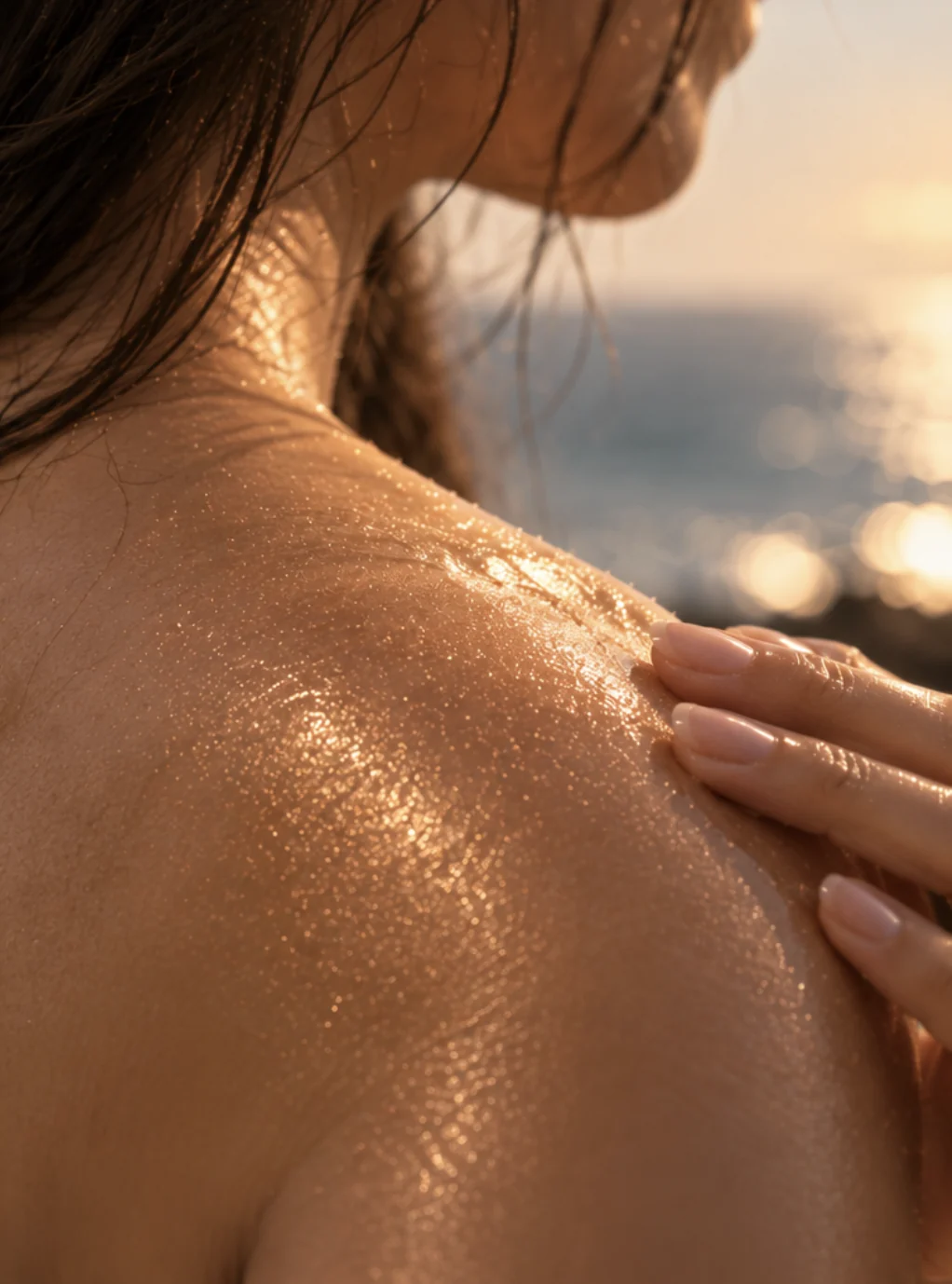
Part of the answer is how it feels. But a lot of it is how it looks. People want skin that catches the light. Not wet, not greasy. Lit.
So we started thinking about what could help with that.
The First Idea
The first thing that came to mind was a birthday party. Glitter on cheeks, on shoulders, on everything.
The first worry came right after. Glitter is usually plastic — tiny pieces of it, made to be thrown around once and never collected again. That wasn’t something we wanted to put on skin and then send into the sea.
So we looked at what else catches light.
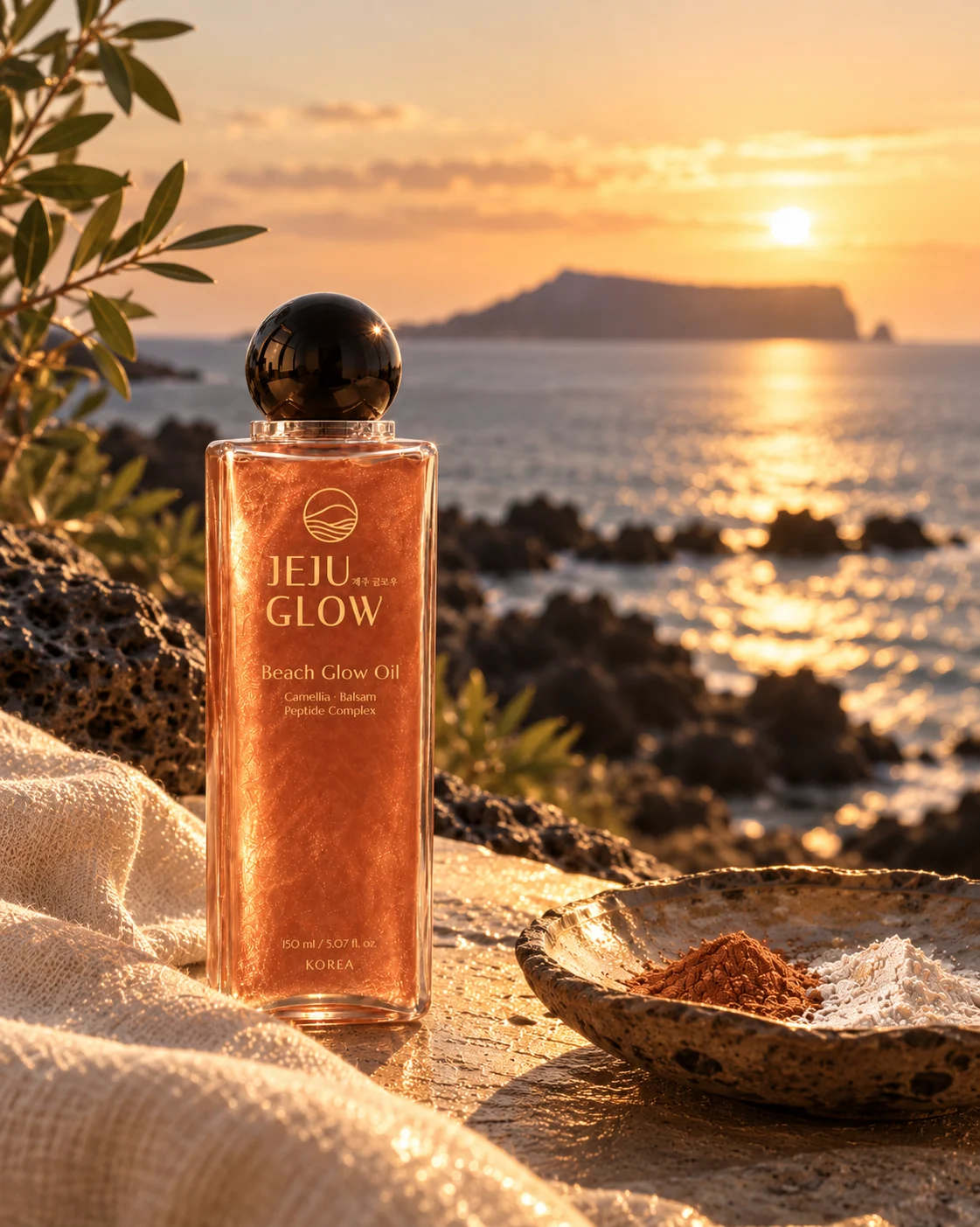
What we found were pearl pigments built on minerals. The white is built on borosilicate, a kind of glass. The bronze is built on synthetic fluorphlogopite — a mica made under controlled conditions rather than mined — coated with iron oxides, which is where its warm colour comes from.
Both are minerals. Both catch light the way we wanted.
Natural or Synthetic
We assumed at first that natural would be the better choice. Most people do.
It turned out to be more complicated than that.
Natural mica comes out of the ground, and in parts of the world its mining has been widely linked to child labour. The supply chains are long, and the further back you go, the harder they are to see. We tried to follow ours and couldn’t get all the way to the source with confidence.
We’d rather not carry a question we can’t answer.
Synthetic mica is made rather than mined, and that changes what you can know about it. Our bronze pearl comes with a specification sheet that lists exactly what’s in it, down to the limits on trace elements. It’s made in Korea.
Synthetic is often treated as the compromise. Here, it turned out to be the version we could know the most about.
Two Tones
We tested white alone first. Under the sun it looked bright, but cool — closer to light on a wall than light on skin at the beach.
Bronze alone had the warmth we were after, but on its own the shimmer turned murky.
So we used both. The white keeps the light clean. The bronze gives it the warmth people expect from skin that’s spent a day by the water.
We tested every version twice — indoors, and outside in full sun — because shimmer that looks right under one kind of light often looks wrong under the other.
Where Light Stops and Glitter Begins
The hardest part wasn’t choosing the pearls. It was deciding how much.
At one stage the bronze was simply too much. The shimmer was fine on skin, but the oil itself looked cloudy in the bottle — less like light suspended in liquid, more like something that hadn’t settled. We cut the bronze back by half.
That was the line we kept looking for, across every round. Enough to catch the light when you move. Never so much that you see the shimmer before you see the skin.
The way light catches on water, not the way glitter catches on a party.